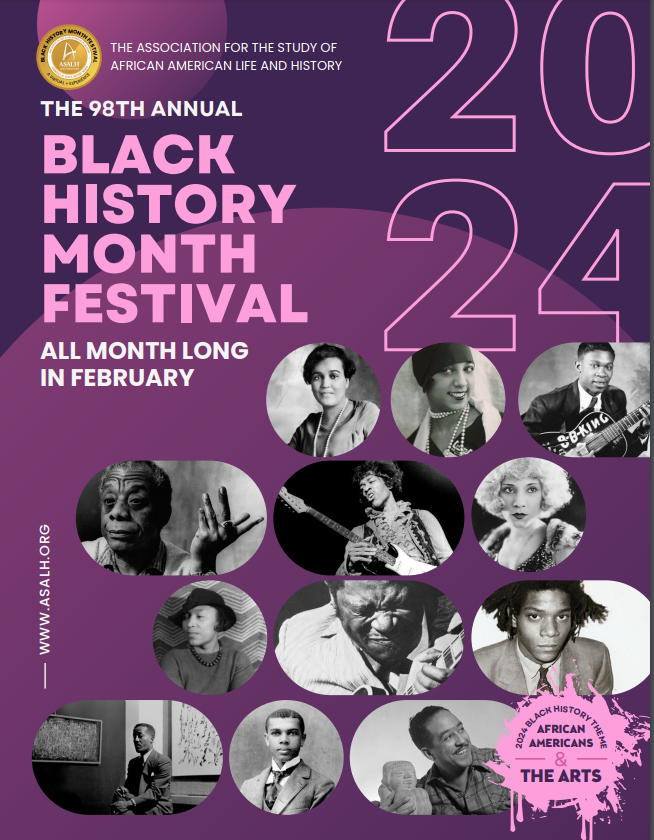
The Coalition for African Americans in the Performing Arts (CAAPA)\, in partnership with the Association for Study o f African American Life and History (ASALH)\, will be celebrating the Art' s national theme\, \;presenting a narrated concert delving into the mu sical history called REVIVAL: Music of the Third Arts Movement in America.
\n
Afr ican American art is infused with African\, Caribbean\, and Black American lived experiences. The African American influence has been paramount in v isual and performing arts\, literature\, fashion\, folklore\, language\, f ilm\, music\, architecture\, culinary\, and other forms of cultural expres sion. African American artists have used art to preserve history and commu nity memory as well as for empowerment. Artistic and cultural movements\, such as the New Negro\, Black Arts\, Black Renaissance\, hip-hop\, and Afr ofuturism\, have been led by people of African descent and set the standar d for popular trends around the world. In 2024\, we examine African Americ an arts and artisans' varied history and life.
\n\;For centurie s Western intellectuals denied or minimized the contributions of people of African descent to the arts as well as history\, even as their artistry i n many genres was mimicked and/or stolen. However\, we can still see the u nbroken chain of Black art production from antiquity to the present\, from Egypt across Africa\, from Europe to the New World. Prior to the American Revolution\, enslaved Africans of the Lowcountry began their more than 30 0-year tradition of making sweetgrass baskets\, revealing their visual art istry via craft.
\nThe suffering of those in bondage gave birth to t he spirituals\, the nation&rsquo\;s first contribution to music. Blues mus icians such as Robert Johnson\, McKinley &lsquo\;Muddy Waters&rsquo\; Morg anfield\, and Riley &ldquo\;BB&rdquo\; B. King created and nurtured a styl e of music that became the bedrock for gospel\, soul\, and other still pop ular (and evolving) forms of music. Black contributions to literature incl ude works by poets like Phillis Wheatley\, essays\, autobiographies\, and novels by writers such as David Walker and Maria Stewart. Black aesthetics have also been manifested through sculptors like Edmonia Lewis and painte rs like Henry O. Tanner.
\nIn the 1920s and 30s\, the rise of the Bl ack Renaissance and New Negro Movement brought the Black Arts to an intern ational stage. Members \;of the armed forces\, such as James Reese Eur ope\, and artists such as Langston Hughes\, Josephine Baker\, and Lois Mai lou Jones brought Black culture and Black American aesthetics internationa lly\, and Black culture began its ascent to become a dominant cultural mov ement to the world. In addition to the Harlem Renaissance\, today\, we rec ognize that cities like Los Angeles\, Chicago\, and New Orleans also were home to many Black artists.
\n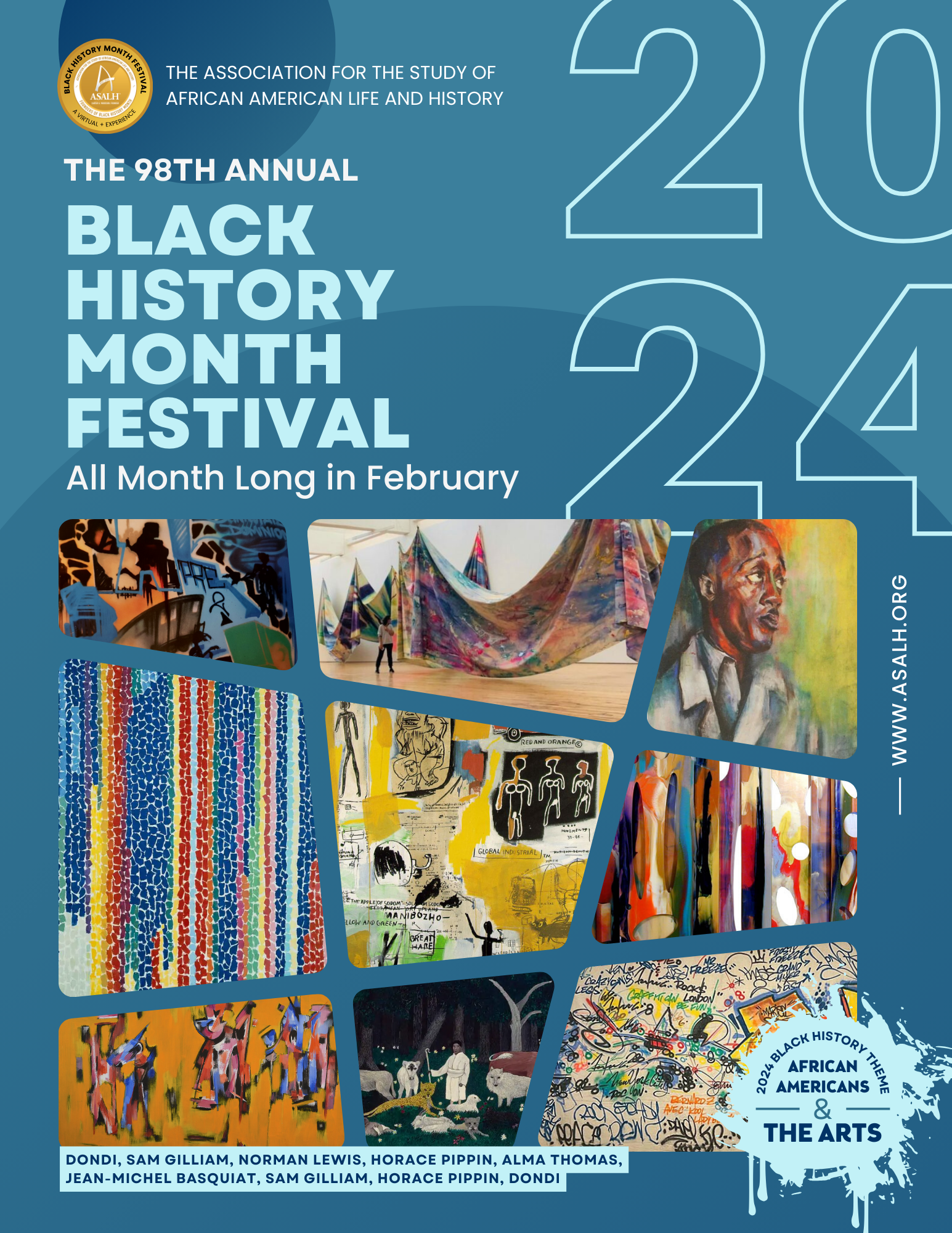
The 1960s continued this thread through the cultural evo lution known as the Black Arts Movement\, where artists covered issues suc h as pride in one&rsquo\;s heritage and established art galleries and muse um exhibitions to show their own work\, as well as publications such as&nb sp\;Black Art. This period brought us artists such as Alvin Ailey\, Judith Jamison\, Amiri Baraka\, Nikki Giovanni\, and Sonia Sanchez. The movement would not have been as impactful without the influences from the broader Black world\, especially the Negritude movement and the writings of Frantz Fanon.
\nIn 1973\, in the Bronx\, New York\, Black musicians (i.e.\ , DJ Kool Herc and Coke La Rock) started a new genre of music called hip-h op\, which comprises five foundational elements (DJing\, MCing\, Graffiti\ , Break Dancing\, and Beatboxing). Hip-hop performers also used technologi cal equipment such as turntables\, synthesizers\, drum machines\, and samp lers to make their songs. Since then\, hip-hop has continued to be a pivot al force in political\, social\, and cultural spaces and was a medium wher e issues such as racial violence in the inner city\, sexism\, economic dis investment\, and others took the forefront.
\nThe term Afrofuturism was used approximately 30 years ago in an effort to define cultural and ar tistic productions (music\, literature\, visual arts\, etc.) that imagine a future for Black people without oppressive systems and examine how Black history and knowledge intersect with technology and science. Afrofuturist elements can be found in the music of Sun Ra\, Rashan Roland Kirk\, Janel le Moná\;e and Jimi Hendrix. Other examples include sci-fi writer Oc tavia Butler&rsquo\;s novels\, Marvel film \;Black Panther\, and artis ts such as British-Liberian painter Lina Iris Viktor\, Kenyan-born sculpto r Wangechi Mutu\, and Caribbean writers and artists such as Nalo Hopkinson and Grace Jones.
\nIn celebrating the entire history of African Ame ricans and the arts\, the Association for the Study of African American Li fe and History (ASALH) puts into the national spotlight the richness of th e past and present with an eye towards what the rest of the twenty-first c entury will bring. ASALH dedicates its 98th Annual Black History Theme to African Americans and the arts.
\nhttps://pgcmls.libnet.info/event/1026 3904 URL;VALUE=URI:https://pgcmls.libnet.info/event/10263904 ATTACH:https://static.libnet.info/images/events/pgcmls/Communico_Heritage_ Icons_BHM.png END:VEVENT END:VCALENDAR